

Top Must-Visit Destinations on Your Drive to the South Coast of England

Driving to Kent and along the south coast is a fabulous quintessential english road trip. We spent 12 days on a road trip from Cheshire to Kent along the south coast and back north through Wales and Herefordshire. If you fancy a staycation this year this blog will provide you with a suggested itinerary of top must-visit destinations and recommended places to stay.
We want to show you gorgeous places to visit, where to stay and suggested walks.
Top Must-Visit Destinations and staycations
1 Challock 3 nights visiting:
Canterbury,
White Cliffs of Dover (National Trust)
Accommodation booked through AirBnB Hegdale Barn hosted by Victoria
2 Kirdford 2 nights visiting:
RHS Wisley
Loxwood
Brighton
Accommodation booked through AirBnB The Annexe hosted by Elaine
3 Cann Common 3 nights visiting:
Stonehenge
Lulworth Cove
Durdle Door
Accommodation booked through AirBnB The Barn hosted by Rosie
4 Westhope Hereford 3 nights visiting:
Tredegar House wales
Croft castle
Ludlow
Accommodation booked through AirBnB The Barn hosted by Annette
Day 1: Leaving Cheshire early one July morning we drove straight down to Challock in Ashford Kent. This may be too far for some of you in one go as it was 250 miles but we wanted to start early one morning and reach the start of our tour.
We chose to stay in an AirBnB called Hegdale Barn in Challock for the first 3 nights so we could use this as our base to explore. The barn was a gorgeous little find and was a building adjacent to the main house but entirely private. From The Barn we walked through adjacent fields and explored the local area. (Some pictures below belong to the owner). You can find this barn on various websites or at www.hegdalebarn.com


The cost of staying in this BnB is approximately £115 per night depending on your dates. This is a popular place to stay so many dates for summer 2026 are taken already. When we arrived our host had left us a gorgeous welcme basket which was thoughful and a lovely way to start our stay. We snuggled up for our first night and chilled out after our early start knowing we had plans for the next day.
Day 2: Our first plan was to take a walking tour of the City of Canterbury which was hosted by John (Uncover Hidden Canterbury). We booked this through Airbnb for £25 each and it was worth every penny. John was entertaining and informative and provided a great way to see the insights of this fabulous city. The tour lasted for 2 hours and you learnt the meaning behind sayings such as "eaves dropping" or why there was a window tax or even a roof tax. The Cathedral was going through a period of rennovation and so we were limited as to what we could see but it was seriously impressive from the outside. Tickets start at £18 per person and we would definitley pay to go inside the next time we visit. It is important to check the website (www.canterbury-cathedral.org) for any closures at the times you would like to visit. There is so much to see from the architecture, the stained glass windows, the grounds and the collections and artefacts inside.


We met John our tour guide in the Old Buttermarket and straight away started to hear some fascinating facts about the city and the way of life in old England.


Tiny Tim's Tearoom is definitely great place for refreshments whether its one of the many varieties of tea or some great food food with traditional options available. There are a limited number of vegan plus vegetarian options too.
So our first day exploring did not disappoint and after enjoying canterbury we returned to our BnB to make dinner and enjoy the summer evening.
Day 3: A tour of the south coast would not be complete without seeing the iconic White Cliffs of Dover.
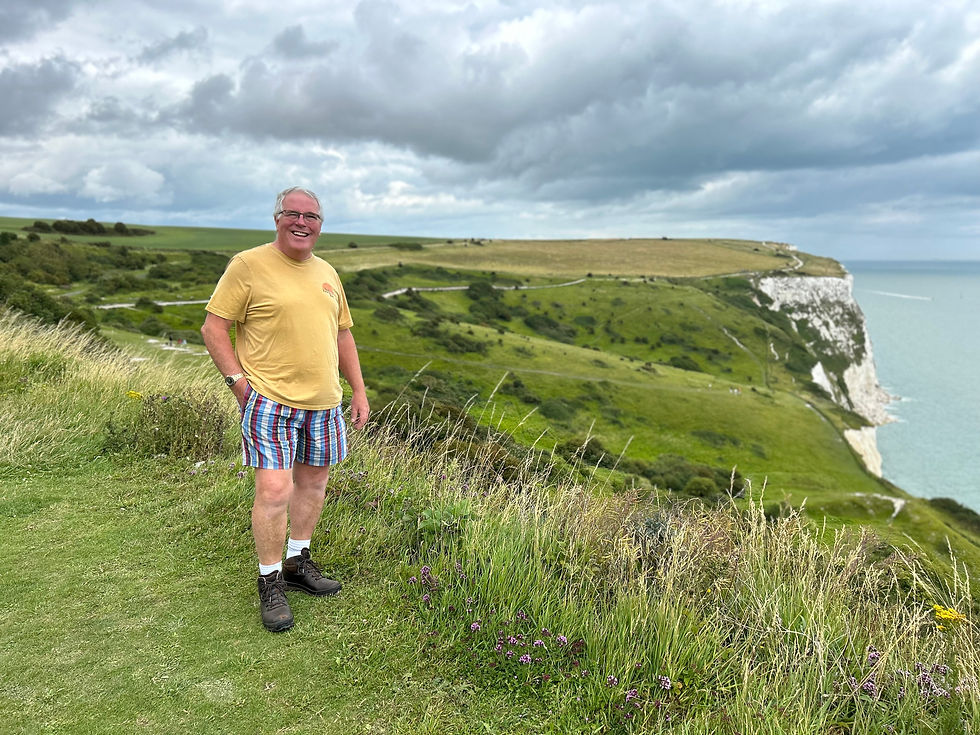

The area above the cliffs is owned by the National Trust and provides a great walk from the visitors centre up to South Foreland Lighthouse which has a National Trust cafe and serves vegan scones such a bonus! The cost of this walk is free and is listed in the Alltrails App too.
This was a fresh blue sky day but honestly once we got to the lighthouse those clouds changed...


The round trip is 3.5 miles and is mainly flat. If you prefer a longer hike to St Margaret's Bay this is 10 miles and slightly more challenging.
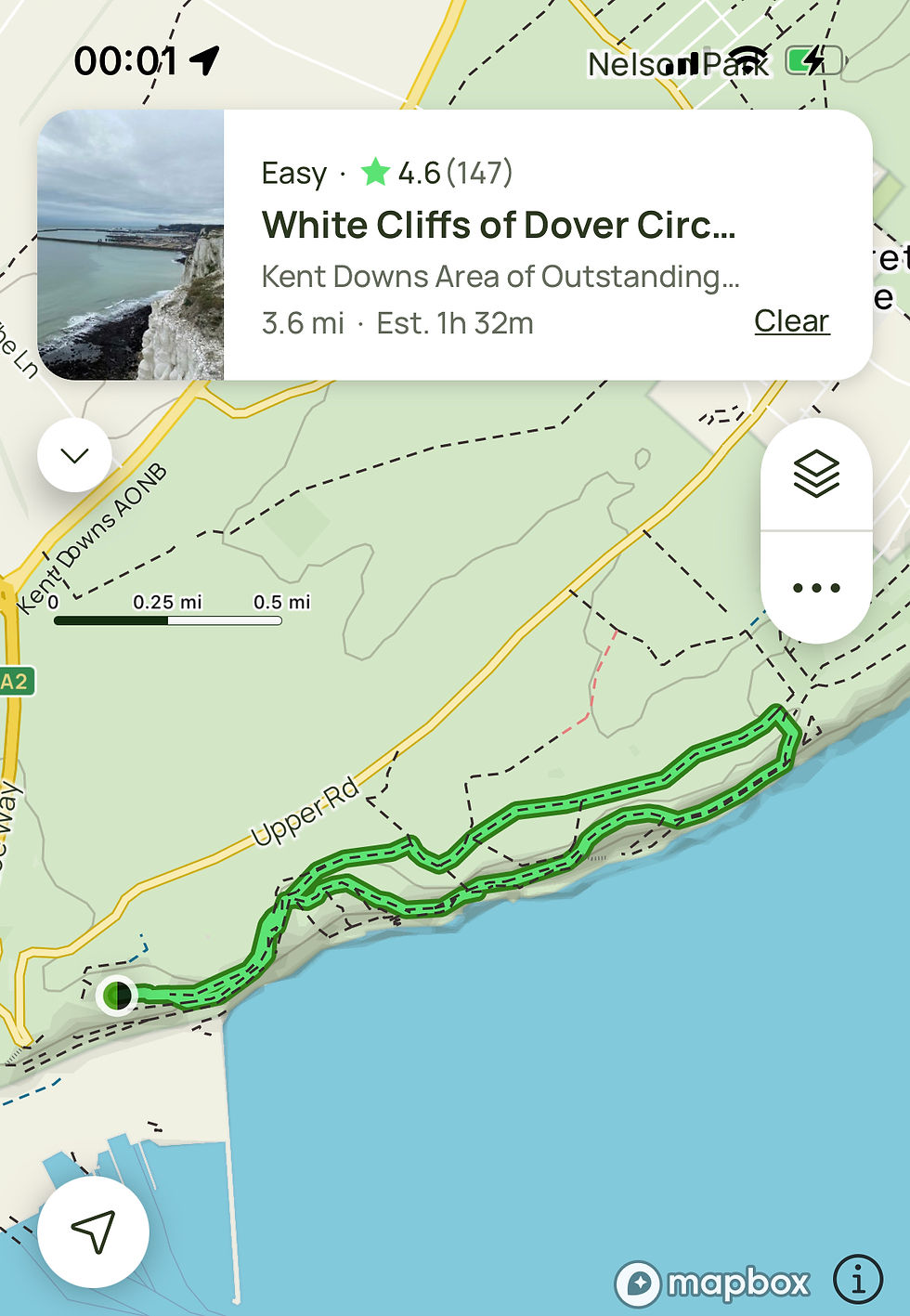
Along the route is the Fan Bay Deep Shelter a WWII bunker which has recently been excavated and is now open for guided tours (from 30th March through the summer). Here soldiers would take cover from enemy gunfire as they descend 125 steps deep into the cliff side. Tours are free for National Trust Members on production of your membership card at the tunnel entrance.
Day 4: As we left our BnB we drove to RHS Wisley. Living in Cheshire our nearest RHS garden is Bridgewater which is impressive and always a pleasure to visit. Now being on the south coast of England we didn't want to miss the opportunity of visiting RHS Wisley a garden mentioned often on BBC Gardener's World and we were members of the RHS. The garden is open every day except for Christmas Day and is free to RHS members. The entrance fee for non members is less than £20 with under 5's free. There is so much to see and do here a day almost doesn't feel long enough.


There are lots a different areas or zones within the gardens and many sculptures which may be an aquired taste for some. We had a beautiful english summers day touring an english garden what more could you ask for?
The lake with decorative herons Chinese Pergola Hares Karen admiring the bonsai tree Boxing Hares Worm in an apple A couple of Hares Michael resting Gold fish in the pond
After a day at RHS Wisley we checked into our next BnB this time at Kirdford. This was an annex and the house resident guests were rescue chickens each with their own great personalities (Rupert loved Michael!), the owner's dogs and we even saw horses walking past on the lane. . The price per night for 2026 in July is an average of £94 with a minimum 2 night stay. We loved everything about this place from its modern wall art to its comfortable bedroom and outdoor space which we had the full use of. Perfect for alfresco breakfasts.
The Lounge Woolley sheep Birds featured Chickens and Roosters More birds Flying swallows Chickens and roosters The outside of the Annexe The bedroom


Day 5: Today was another day for walking and we took the canal circular walk around Loxwood along The Wey and Arun Canal. This was 5.3 miles with 984 feet elevation gain and took us 2.5 hours. This was perfect for exploring some of the area at a steady pace. The countryside was beautiful, we saw plants that looked like they'd just come out of John Wyndham's book The Day of the Triffids and read interesting facts about the canal.


Before we moved on we explored the Village of Kirdford an iddyllic setting with a village green and village shop. The wooden sculptures on the green were fun and playful and you certainly had to look at them from all sides.
The Village Store Wooden Sculpture of barrels Wooden Sculpture
Day 6: Leaving Kirdford we headed off to Brighton. Sadly the weather wasn't great but we did manage to visit the victorian pier and a walk along the prom revealed this was a city which still needed some love and restoration. Brighton is known for its diverse and inclusive population with lots to see and do. The Royal Pavillion is a must visit and signals a time of oppulence and comfort. Built in the 1780's it was originally a small lodging house overlooking the promenade and was rented by George the Prince of Wales. At this time Brighton was developing as a seaside retreat for rich and famous Londeners having once been a decaying seaside town. Over the next 35-40 years the Prince commissioned notable architects to develop his modest lodging house into a palace with state of the art lighting, heating and sanitation. George's presence in Brighton served to have a great impact on the city's social development and prosperity. The impact of the Regency Era can still be seen today.
Victorian wrought Iron Beautiful Victorian iron works and tiling Iconic Brighton Pier Brighton Palace Pier Karen & Michael Birighton Pier Brighton Pier
We found a great place for coffee with great vegan options. Fika was located along the promenade and had a great social atmosphere with shared seating spaces a real hub and hive of activity.


After leaving a rainy Brighton we checked into our BnB at Cann Common in Dorset. We had 3 nights here to explore the areas of Stonehenge and Lulworth Cove. This was definitely one of your top must-visit destinations on your drive to the south coast of England. The BnB was a sizable 2 story barn attached to the main house with its own private garden you could sit in and lots of artwork inside some of which were created by her son. Our hostess Rosie, had made sure the house catered for our every need including a basket of goodies for us to enjoy. In July 2026 this costs approximately £123 per night and has a 3 night minimum stay.
The lounge table The bedroom The back garden The front door The lounge A piece of artwork
Day 7: Our plan today was to hike the Woodhenge to Stonehenge route. This was 5.3 miles with 991 feet of elevation. This was a great way to see both henges and it was totally free. Whilst many tourists visit and pay to get close up to Stonehenge our hike took us to the perimeter and we had a great view. The entrance fee into Stonehenge is free for English Heritage members or discounted for National Trust members. Adults pay £27.20 with children starting at £17.20 and Seniors pay £23.60. Car parking is free with your entrance ticket or membership otherwise it is £3 for the day. The cost of entry for a family can work out pretty steep but if you take the hike starting at Woodhenge where parking is free in our opinion you get to see a pretty good show albeit on the other side of the fence.

Woodhenge lies approximately 3.2 miles north-east of Stonehenge which is why both are easily accessed on one hike/trip. Originally built in the same era Woodhenge was 6 concentric circles of wooden pillars. They were only discovered in 1925 from an aerial photograph and now the pillars have been replaced by concrete ones to mark their location. Entrance to this site is free and there is parking nearby. It's a gorgeous walk but a gentle reminder that there may be livestock namely cows in one or two of the fields so take care especially if they have calves or you are with your children or pets. (They were a bit noisy as we walked across their field so we didn't delay to be honest)


As you leave Woodhenge and pass through the Cuckoo Stone Field there are more reminders of pervious civilisations and how they regarded the land and it significance.


In the field where the Cuckoo Stone lies is signals where the remains are of human life for almost 6,000 years.
The National Trust has an information board here which explains the history of this area of land. It is stated that around 3500 BC the early farmers built a long barrow here. A long barrow in the Neolithic period is a long earth or stone mound that was a communal tomb and ritual site. Some could be 100 metres long and were built by the farmers to honor their ancestors. These are the oldest surviving architectural monuments in Britain. The Cuckoo Stone is a fallen sarsen stone and was original upright less than a metre from where it lies today. A thousand years after this long barrow was built there was a settlement at Durrington and the people from here built a row of enormous timber structures just south of the Woodhenge pillars. The thoughts are that these may have been timber platforms or buildings connected with the dead. Later though in the Bronze age a round barrow cemetery was built at this same spot and they found also the cremated remains of 3 people in pots near this Cuckoo Stone. It is known the stone remained an important place of ceremony and burial into the Roamn era.
The history behind Woodhenge and Stonehenge is fascinating dating to the Neolithic period and Bronze age. The method of transport of the stones is not known but they do know that some of the stones were from the Presili Hills in south-west Wales over 150 miles away. This became a UNESCO World Heritage Site in 1986 one of the first in the UK. There is a wealth of information about Stonehenge on the English Heritage website definitely recommended. www.english-heritage.org.uk

It was lovely to return to our BnB after this gorgeous day out to cook and sit in the lounge with our drinks and nibbles and reflect on the people who had inhabited this land before us and so long ago it was mind blowing at times.


Day 8: Lulworth Cove in Wareham on the Jurassic Coast in Dorset was recommended to us and so we could not travel to this part of England and not see what the hype was all about. This stunning circular cove is very popular with tourists and so be warned as on a fine day it can be very busy but the views of the turquoise water and white pebble beach do not disappoint. There is a large pay and display car park near by and several areas to find refreshments. It was everything a quaint little harbourside village was all about. The scenery was stunning and the photo opportunites a camera lover's dream.


As you climb up from the Cove you can see it in full. The photographs here do not show it at its finest as it was a slightly overcast day. When the sun shone through the clouds though this water was stunning in colour. A safe cove for water activities.
From Lulworth Cove you can walk to see the famous rock formation Durdle Door. Whilst this is only a mile away the steep walk up the steps is not for the faint hearted. You can also drive to see Durdle Door but again the walk down to the beach is very steep and uneven. Care should be taken at this beach as there can be rip tides and the depth and temperature of the water can change very quickly. There are no life guards on this beach so whilst it looks inviting to swim here many swimmers have got into difficulty and some have lost their lives.
There were many bathers in the sea as it was a summer's day but im not sure how many knew of the risks of these waters.


This was the last day for us on the south coast before we turned north again and honestly we wanted to stay longer as there are so many beautiful places to see.
Day 9: We began our journey northwards and crossed the Severn Bridge into Wales near Newport and Cardiff.


We found Tredegar House almost by accident after looking through the National Trust book. It was built in the late 17th Century and is now run by the National Trust. It has 90 acres of gardens and parklands and is very much an icon of Welsh history which is worthy of a visit.
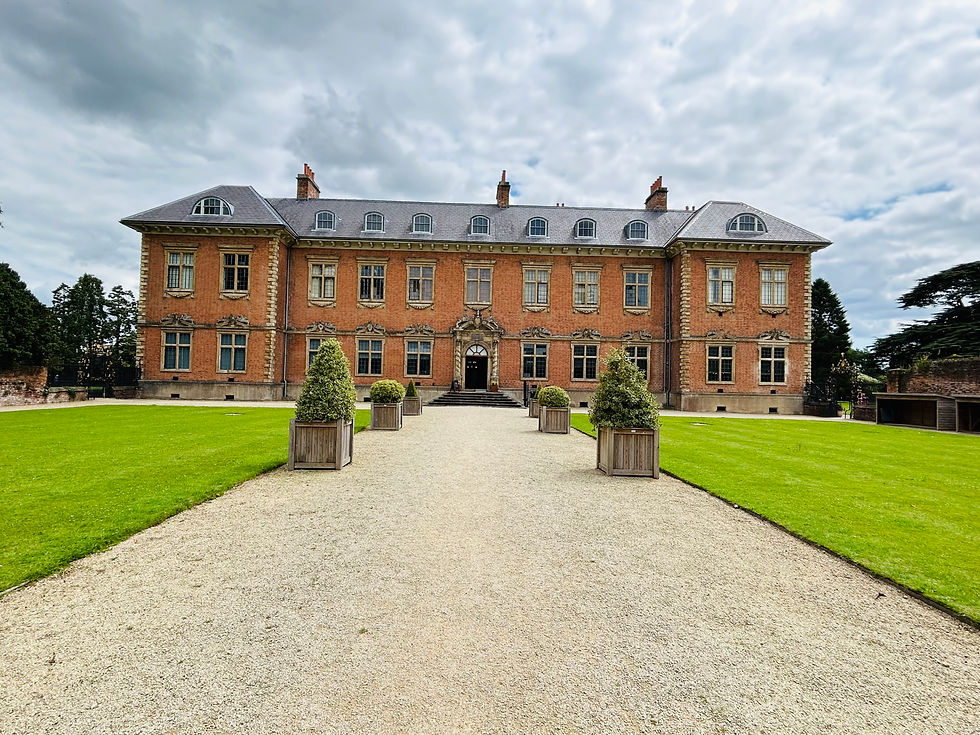


It was owned by the Morgan Family for over 500 years during which time they were responsible for building up the town of Newport as a trading centre. Whilst the Morgan family traded with Africa and the West Indies they also petitioned for the abolition of slavery in 1826. The family petitioned to increase the rights of the working class and in later years became public benefactors giving away land. The preservation of this house was amazing with rooms set out as they would have been when the family lived there. The floorboards on their own were a feature as they were single pieces of solid oak 42' long and 1/2" thick dating back to the 1700's. We saw the plans of the Newport Transporter Bridge opened by Lord Tredegar we we later drove passed.


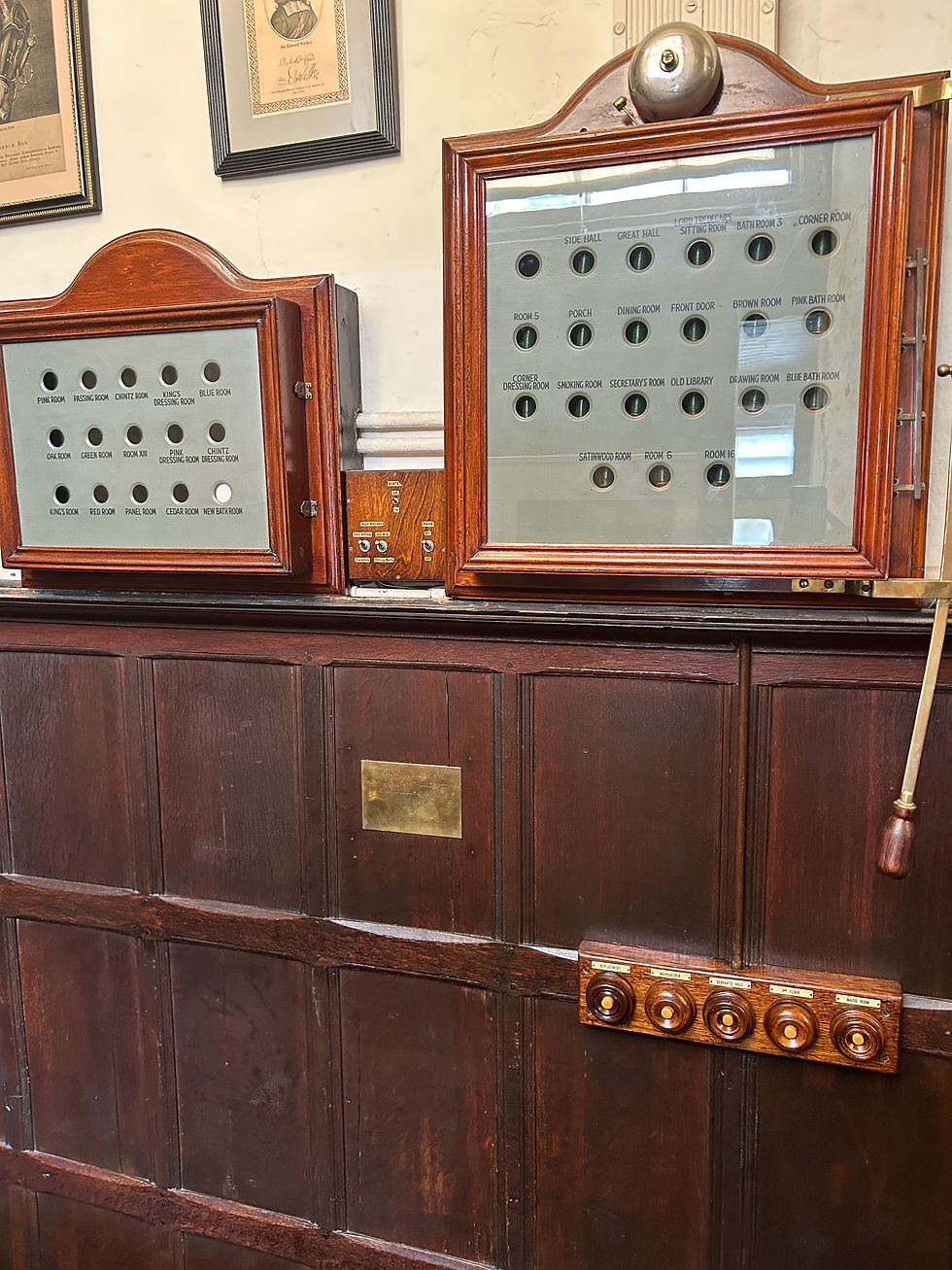
We loved visiting this house; it had lots to offer and was a great find on our journey into Wales. Sadly we wanted to explore more of Wales but this is for another tour as we journeyed northwards into Herefordshire.
We stayed for the next 3 nights at Westhope in Hereford. This was a standalone lodge in the gardens of an idyllic location. Annette our hostess was chatty and generous with her time sharing hummus recipes with us which we still make today. This was booked through Airbnb and costs about £90 per night in peak season.
Our lodge The view The lounge Looking down The apex Lovely artwork The apex The resident cat The little touches of history
From our lodge we explored the area on foot going through the tiny village (a hamlet in truth) and had lunch at the nearest pub The Bush Inn. We walked almost 4 miles just meandering the lanes.


Day 10: We visited Croft Castle which is located in Leominster in Herefordshire. The Croft family owned this castle for a millenium and have been loyal supporters of the Crown since the Norman Conquest in the 11th century. Having served politically, in the church and the military they are also mentioned in the Doomsday Book. The Marcher Lords were defenders of the borders between Wales and England for 350 years and the Croft family were known to be of this ilk. The history of this house and family is fascinating and there was a period of time ( over 200 years) when the Croft Faily were no longer the owners of the Castle. Descendents however, managed to buy it back in 1923 and although it changed hands a couple of time since then it was eventualiy aquired by the National Trust in 1957. Today there are 3 flats within the castle inhabited by descendents of the Croft Family and the National Trust maintain contact with the 14th Baronet who lives in Australia.
Croft Castle Garden landscaping Apple Sculpture Looking up at Croft Castle Apples depicted everywhere Michael examining the gateway
Our evenings in Westhope were gorgeous with the evening sun and time to sit with a chilled glass of Sauvignon Blanc on the balcony.

Day 11: Today we headed towards Ludlow about 40 minutes from Westhope. This is a thriving medieval market town in Shropshire near to Hereford and is the site of a castle and an amazing church St Laurence's.


There are many amazing architectural buildings some dating back to the 11th century AD.


There are no shortage of places to eat and the Castle Square hosts the local market every Monday, Wednesday Friday and Saturday. We had this fab tapas style lunch at Number 9 overlooing the square and people watching. The market even has a well known liquorice stall (@liquoricestall) which we still buy from as they have vegan liquorice not always easy to find. It makes a great birthday present for Mr C.


You can easily spend a day here just exploring the town and its history together with visiting the many independent shops and traders. We like this town so much we have been to visit more than once and brought other people to visit too.
Leaving Ludlow we spent our last night in Westhope before we headed home back to Cheshire on Day 12. This tour had so much to offer in terms of comfortable places to stay with their own levels of quirkiness and great hostesses to the richness of the English and Welsh countryside and heritage. This is perfect for 11-12 days and could easily be extended.


Comments